

LASIK After 40
Can you have LASIK after 40?
If you are over 40 and thinking about laser eye surgery, you may be wondering if you are too old for LASIK.
The good news is that age alone does not decide whether you can have LASIK. Many people over 40 may still be suitable for laser eye surgery. However, your eyes can change as you get older, so a detailed eye assessment is important before deciding on treatment.
After 40, many people start to notice changes in their near vision. This is usually caused by presbyopia, an age-related change in the natural lens of the eye. It can make reading, using your phone, or seeing small print harder.
This means that having LASIK after 40 can involve different considerations compared with having LASIK at a younger age.
What changes in your eyes after 40?
Presbyopia becomes more common
Presbyopia is a normal age-related change that affects the eye’s ability to focus on nearby objects.
When you are younger, the natural lens inside your eye can change shape to help you focus on things close to you. As you get older, the lens becomes less flexible.1https://pmc.ncbi.nlm.nih.gov/articles/PMC10806251/
This can lead to blurry near vision.
You may find yourself holding your phone or a book further away to read it. You may also need brighter light or reading glasses.
Distance and near vision are different
LASIK can correct certain refractive errors, such as short-sightedness, long-sightedness, and astigmatism.
However, LASIK does not stop the natural ageing process that causes presbyopia.
This is an important point to understand if you are considering LASIK after 40.
You may have clear distance vision after LASIK but still need reading glasses for close-up tasks.
Your surgeon will discuss this with you during your assessment.
What does LASIK after 40 involve?
Your eyes need to be assessed
Before laser eye surgery, your eyes need to be carefully examined.
Your assessment may include checks of your prescription, corneal shape, eye health, and tear film.2https://pmc.ncbi.nlm.nih.gov/articles/PMC10806251/
Your surgeon will also ask about your lifestyle and what you want to achieve from treatment.
This helps determine whether LASIK may be suitable for you.
Your vision goals matter
People have different reasons for considering LASIK.
You may want to reduce your need for glasses when driving or playing sport. You may want clearer distance vision or less reliance on contact lenses.3https://pmc.ncbi.nlm.nih.gov/articles/PMC10806251/
It is important to explain your goals clearly during your consultation.
Your surgeon can then discuss what laser eye surgery may and may not achieve for you.
What about reading glasses after LASIK?
You may still need them
One of the most important things to understand about LASIK after 40 is that you may still need reading glasses.
This is because LASIK corrects the shape of the cornea. It does not reverse the natural ageing of the lens inside the eye.4https://pmc.ncbi.nlm.nih.gov/articles/PMC10806251/
If you already have presbyopia, your surgeon will discuss this before treatment.
For some people, another approach may be considered instead of standard LASIK.
Monovision may be an option
Monovision is one approach that may be considered for some patients with presbyopia.
With monovision, one eye is corrected mainly for distance vision while the other is adjusted to help with near vision.5https://pmc.ncbi.nlm.nih.gov/articles/PMC10806251/
Not everyone adapts well to monovision.
A contact lens trial may be used before surgery to see how your vision responds to the difference between your eyes.
Your surgeon can explain whether this approach may be suitable for you.
Are there other options after 40?
Laser options
If you are over 40, laser eye surgery may still be an option, depending on your eyes and vision needs. Treatments such as LASIK and other forms of laser vision correction may be suitable for some people.
Presbyond is another laser vision correction option that may help address some of the changes in near vision that can occur with age. It uses laser treatment to create a different focus for each eye, which may reduce the need for reading glasses for some patients.
The most suitable treatment will depend on your eye health, prescription, corneal measurements and vision goals. A detailed eye assessment can help determine which options may be appropriate for you.
Lens replacement
For some people over 40, a lens-based procedure such as refractive lens exchange may be discussed.
Refractive lens exchange involves replacing the natural lens inside the eye with an artificial lens.
This is a different procedure from LASIK and has different benefits, risks, and recovery considerations.
It may be an option for some people with presbyopia, but it is not suitable for everyone.
A detailed assessment is needed before deciding which treatment, if any, is appropriate.
Is LASIK recovery different after 40?
Recovery varies between people
Age can be one of many factors that may affect your experience of recovery.
Some people notice clearer vision soon after LASIK, while others may take longer for their vision to settle.6https://pmc.ncbi.nlm.nih.gov/articles/PMC10806251/
Dry eyes can also occur after laser eye surgery.
Your surgeon will give you instructions about eye drops, rest, exercise, driving, and other activities during recovery.
Following these instructions is an important part of your aftercare.
Your vision may continue to change
Even after successful laser eye surgery, your eyes continue to age.
Presbyopia can continue to develop over time.
This means your near vision may change even if your distance vision remains clear.
Understanding this before treatment can help you have realistic expectations about your results.
What are the benefits of an eye assessment?
Understanding your options
There is no single treatment that is right for everyone over 40.
An eye assessment allows your surgeon to look at your individual eye health and discuss the options that may be available to you.7 https://pmc.ncbi.nlm.nih.gov/articles/PMC10806251/
You can also ask questions about glasses, contact lenses, laser eye surgery, and lens-based procedures.
Making an informed decision
Choosing to have eye surgery is a personal decision.
You should understand the possible benefits, risks, limitations, recovery, and costs before deciding whether treatment is right for you.
Your surgeon can provide information based on your individual circumstances.
When should you consider an assessment?
Don’t wait if your vision is changing
If you are over 40 and noticing changes in your vision, an eye assessment can help identify what may be causing them.
Blurred near vision is often linked to presbyopia, but other eye conditions can also affect vision as we age.8https://pmc.ncbi.nlm.nih.gov/articles/PMC10806251/
Regular eye checks are an important part of looking after your eye health.
Learn more about LASIK after 40
Being over 40 does not automatically rule out LASIK. However, age-related changes such as presbyopia can mean there are additional factors to consider when exploring laser eye surgery.
For some people, LASIK may be suitable. Others may be better suited to another form of laser vision correction or a lens-based procedure. The right option depends on your prescription, eye health, corneal measurements and vision needs.
At Envision Eye Centre in Sydney, we offer a range of laser vision correction options. Our laser technology is regularly reviewed and updated in line with developments in medical technology, helping our team provide different treatment approaches based on each patient’s individual needs.
During your assessment, we can explain the available procedures, their potential benefits and limitations, and the risks involved. This can help you make an informed decision about your vision correction options after 40.
Take the next step
If you are over 40 and considering laser eye surgery, the first step is finding out whether you may be suitable.
Take our suitability self test today to learn more about whether laser vision correction may be an option for you.
Home »
Are you suitable for laser eye surgery?
Laser eye surgery is not suitable for everyone. Take the first step to find out whether you can benefit.
Our most popular procedures
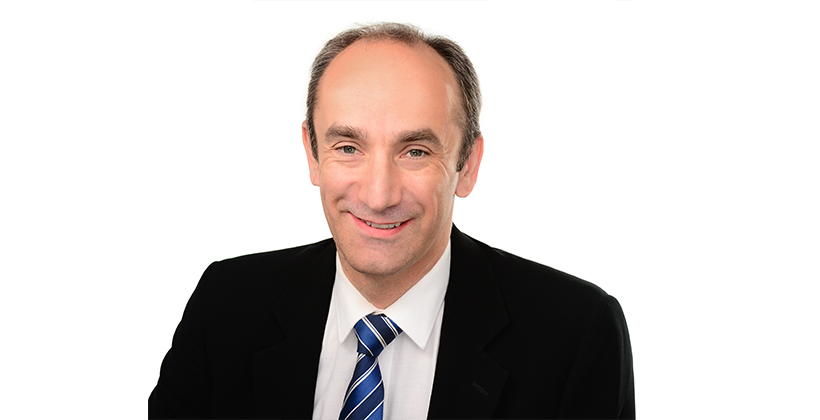
Hi, I’m Dr John Males
I’m the founder and principal surgeon at Envision Eye Centre, specialising in laser vision correction, cataract, and corneal surgery. With over 20 years’ experience, I’ve been involved in introducing advanced procedures such as SMILE® and laser-assisted cataract surgery in Australia. I’ve held leadership roles at St Vincent’s Hospital and Sydney Eye Hospital, and I continue to contribute to teaching and research through the University of Sydney. My focus is always on delivering safe, precise, and personalised care, using the latest technology to help patients achieve the best possible visual outcomes.
Dr John Males
M.B B. Sc. (Med)(Hons) MMed (Clin Epi) FRANZCO