

Understand glaucoma before it silently affects more of your vision

Glaucoma damages the optic nerve and often develops slowly, which is why early diagnosis and treatment matter

Understand glaucoma before it silently affects more of your vision

Glaucoma damages the optic nerve and often develops slowly, which is why early diagnosis and treatment matter

Glaucoma can change vision without warning

Explore the common types of glaucoma, the risk it carries for the optic nerve, and when it may be time to seek advice

Glaucoma is a disease that causes damage to your optic nerve and progressively becomes worse over time. In most cases, the damage is caused through an increased pressure inside the eye.

Glaucoma is more common in the ageing population. In Australia, it is estimated that over 300,000 people have glaucoma1https://www.cera.org.au/conditions/glaucoma/, 50% of these are undiagnosed. Glaucoma is the leading cause of irreversible blindness worldwide.

Eye pressure, called intraocular pressure (IOP), is measured in millimetres of mercury (mm Hg). Normal eye pressure ranges from 10-21 mm Hg. Most people with glaucoma have an IOP of greater than 21 mmHg.

Commonly, the cause of Glaucoma is due to the increased pressure in the eye (Intraocular Pressure). This occurs when the fluid (aqueous humour) isn’t being circulated normally at the front of the eye. The eye has a natural drainage system which regulates pressure in the eye. When this drainage system becomes blocked, fluid builds up leading to glaucoma.

Glaucoma often runs in families, but doctors still can’t explain the direct cause of the blockage. Glaucoma generally affects both eyes. However, it can progress differently between the eyes.

Many people don’t realise they have glaucoma as it occurs progressively. The main noticeable symptom of Glaucoma is a loss of peripheral vision and in extreme cases tunnel vision. It is an irreversible but treatable condition, so it is best to diagnose it as early as possible.

The following techniques are used to detect glaucoma:

  • Tonometer – Measures the intraocular pressure in your eye. The test is quick, simple and painless
  • Visual field test – Testing your visual field lets your doctor know if peripheral vision is being lost. There are several methods of examination available to your doctor
  • Ophthalmoscopy – Allows the Ophthalmologist to look directly through the pupil at the optic nerve to indicate whether or not damage from glaucoma is present
  • Imaging technology – Newer technology to evaluate the optic nerve and retinal nerve fibre layer, the areas of the eye damaged by glaucoma with OCT optical coherence tomography
  • Gonioscopy – Examines the angle where fluid drains out of the eye and whether the angle is open, narrow, or closed.

Open Angle Glaucoma

  • Open Angle Glaucoma is the most common type of glaucoma. The damage to the optic nerve progresses slowly and destroys peripheral vision gradually. The drainage angle appears to be open but does not function properly leading to increased pressure in the affected eyes. Typically, there are no symptoms in the early stages of this type of glaucoma.

Low Tension Glaucoma

  • A unique condition in which optic nerve damage and vision loss have occurred, despite a normal pressure inside the eye. This is usually caused from an unusually fragile optic nerve that can be damaged despite a normal pressure inside the eye or because of reduced blood flow to the optic nerve.

Secondary Glaucoma

  • This type of glaucoma usually develops as a result of other disorders of the eye such as an injury, cataracts and eye inflammation. The use of cortisone steroids has a tendency to raise eye pressure and therefore IOP should be checked frequently whilst using these types of medications.

Angle-Closure Glaucoma

  • This is a rarer and very different to open-angle glaucoma as the eye pressure usually rises very quickly as the drainage canals actually get blocked. Symptoms of acute angle-closure glaucoma may include headaches, eye pain, nausea, halos around lights at night, and very blurred vision. A simple test can be used to see if your angle is normal and wide or abnormal and narrow.

Congenital (childhood) Glaucoma

  • This is a rare form of glaucoma which occurs in babies and young children. It is usually diagnosed within the first year of life. It may be an inherited condition, caused by incorrect development of the eye’s drainage system before birth. Parents may note that the child is sensitive to light, has enlarged cloudy eyes and excessive watering. Surgery is usually required.

Glaucoma can be treated with eye drops, oral medication, laser surgery, traditional surgery or a combination of these. The goal of any treatment is to prevent loss of vision, as vision loss from glaucoma is irreversible.

Read more about glaucoma surgery.

Clear guidance for your eye care journey

Eye treatment options can vary from person to person. We help you understand what is happening and what care may be right for you

Step 1: REACH OUT

The first step is to book an assessment so your symptoms, concerns, or vision goals can be discussed with the clinic. Give our friendly team a call or use our easy contact form to get in touch.
Step 2: WE’LL MEET

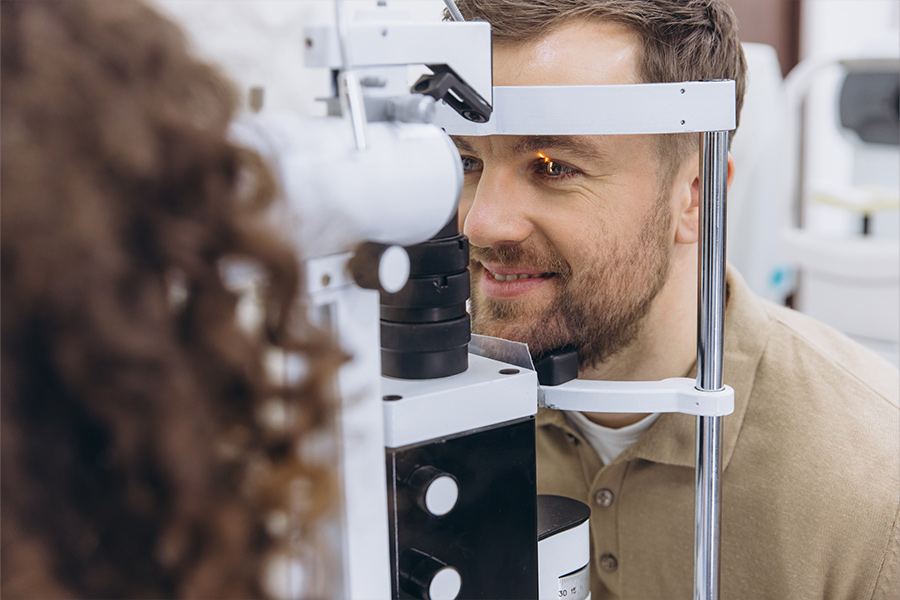
At your visit, our refractive surgeons will examine your eyes, explain the findings, and talk through the treatment options that may be appropriate for your condition and needs.

Step 3: ENJOY COMFORT

After treatment, the aim is to help you see more clearly, feel more comfortable, and manage your eye health with greater confidence. Depending on your condition and treatment plan, this may make daily life feel easier and more manageable.

Find comfort and clarity for your eyes

Contact us to discover the next step toward healthier, more comfortable vision

Hi, I’m Dr John Males

I’m the owner and principal surgeon at Envision Eye Centre, specialising in laser vision correction, cataract, and corneal surgery. With over 15 years’ experience, I’ve been involved in introducing advanced procedures such as SMILE® and laser-assisted cataract surgery in Australia. I’ve held leadership roles at St Vincent’s Hospital and Sydney Eye Hospital, and I continue to contribute to teaching and research through the University of Sydney. My focus is always on delivering safe, precise, and personalised care, using the latest technology to help patients achieve the best possible visual outcomes.

Dr John Males

M.B B. Sc. (Med)(Hons) MMed (Clin Epi) FRANZCO