

Am I Eligible for Laser Eye Surgery?
Sick of wearing glasses or dealing with contact lenses? Laser eye surgery may help correct some common vision problems, including short-sightedness, long-sightedness and astigmatism. However, laser vision correction is not suitable for everyone.
Your prescription is only one part of the decision. Your age, eye health, corneal tissue, prescription stability and the shape of your cornea can all affect whether laser eye surgery may be suitable for you.
So, how do you know if you could be eligible for a laser procedure?
What prescriptions can laser eye surgery correct?
If you wear glasses or a contact lens, you will be familiar with your prescription. It is measured in diopters (D).
Laser refractive surgery can correct a range of prescriptions. The exact range depends on the type of treatment and the technology used. Some procedures may treat short-sightedness, long-sightedness and astigmatism, while others are more limited.
A stable prescription is also important. Your eye surgeon will check whether your prescription has remained stable before recommending surgery. A changing prescription may mean that laser eye surgery is not suitable at that time.
Your prescription is only one part of the assessment. Your eye surgeon will also look at your overall eye health and the shape and thickness of your cornea.
This is important because laser procedures change the shape of the cornea. If there is not enough suitable corneal tissue, or if there are other concerns about the health of your eyes, another treatment may be recommended.
At what age can I have laser eye surgery?
Laser eye surgery is generally considered for adults whose eyes have finished developing and whose prescription is stable.
There is no single age that makes someone automatically eligible. Your eye surgeon will consider your age alongside your prescription, eye health and other factors.
Age can also affect the type of vision problems you experience.
After about 40, many people begin to develop presbyopia. This is a natural change in the eye that makes it harder to focus on things up close. You may notice blurred vision when reading, using your phone or doing other close-up tasks.
Laser eye surgery does not reverse the natural ageing of the eye that causes presbyopia. Depending on your circumstances, a different treatment may be considered, such as lens replacement.
A lens replacement procedure involves removing the natural lens inside the eye and replacing it with an artificial lens. Your eye surgeon can explain whether this type of surgery may be suitable for you.
What laser eye surgery procedures am I eligible for?
There are several laser eye surgery procedures available today. Three commonly discussed options are PRK, LASIK and SMILE®.
These surgery procedures use different techniques to change the shape of the cornea. The procedure recommended for you will depend on your prescription, corneal tissue, eye health, lifestyle and other individual factors.
PRK
PRK, stands for photorefractive keratectomy. It is a type of laser vision correction that treats the surface of the cornea.
During PRK, the surgeon removes the thin outer layer of cells from the cornea. A laser is then used to reshape the corneal tissue so that light can focus more accurately on the retina.
PRK may be considered for some people who have thinner corneas or who may not be suitable for LASIK. It can be used to treat certain levels of short-sightedness, long-sightedness and astigmatism.
One difference between PRK and LASIK is the recovery process. Because the surface layer of the cornea needs to heal after PRK, visual recovery can take longer.
Your eye surgeon will explain what recovery may look like for you before you decide whether this surgical procedure is appropriate.
LASIK
LASIK, stands for laser-assisted in situ keratomileusis. You may also see it written as laser assisted in situ keratomileusis.
During LASIK surgery, the surgeon creates a flap in the cornea. The flap is lifted so that a laser can reshape the underlying corneal tissue. The flap is then placed back into position.
The LASIK procedure can correct certain levels of short-sightedness, long-sightedness and astigmatism.
LASIK may not be suitable for everyone. For example, the shape and thickness of your cornea need to be suitable for the procedure. People with certain eye conditions may also need to consider another option.
Dry eyes are another factor your eye surgeon may assess. Some people experience dry eyes after LASIK, and those who already have dry eye symptoms may need extra assessment before treatment.
People who take part in contact sports may also need to discuss their activities with their surgeon. This is because an impact to the eye can cause problems with the corneal flap.
SMILE®
SMILE®, is another type of laser vision correction. The procedure uses a laser to create a small piece of corneal tissue, known as a lenticule, inside the cornea.
The surgeon then removes this tissue through a small incision. This changes the shape of the cornea and can correct certain types of refractive error.
Unlike LASIK, SMILE® does not create a large corneal flap. This means it may be considered for some people who have concerns about flap-related issues.
SMILE® is commonly used to treat short-sightedness and can also treat certain levels of astigmatism. Its suitability depends on the individual patient and the technology available.
The types of lasers and techniques used can also vary between procedures. Your surgeon will explain which laser procedure may be appropriate based on your eyes and prescription.
What else can affect eligibility?
Having a suitable prescription does not automatically mean that you are eligible for laser eye surgery.
Your eye surgeon will assess your eyes in detail before recommending treatment. This may include checking your prescription, corneal thickness, corneal shape, tear film and general eye health.
Your medical history and previous eye treatments may also be relevant.
Dry eyes, certain corneal conditions and other eye health problems can affect whether laser vision correction is appropriate. In some cases, these issues may need to be treated or monitored before surgery can be considered.
Your surgeon will also discuss possible risks and side effects. Like any surgical procedure, laser eye surgery has potential risks and does not guarantee perfect vision.
Some people may experience temporary symptoms such as dry eyes, glare, halos or blurred vision after treatment. The level and duration of these symptoms can vary.
There may also be other treatment options available if laser eye surgery is not suitable.
How do I know which procedure is right for me?
The best way to find out is through a detailed assessment with an eye surgeon.
An assessment allows your surgeon to look beyond your glasses or contact lens prescription. They can examine your eye health, measure your cornea and discuss your vision needs.
Your lifestyle is also important. For example, your work, hobbies, sports and how often you wear contact lenses may all be relevant when discussing treatment options.
You should also tell your surgeon about any previous eye problems or surgery. This information can help them decide whether laser vision correction is suitable and which procedure may be appropriate.
Find out if laser eye surgery may be suitable for you
If you are considering laser eye surgery in Sydney, an assessment can help you understand your options.
Envision Eye Centre is an ophthalmology practice in Sydney that offers laser vision correction, including PRK, LASIK and SMILE®.
The team can assess your eyes and explain the different laser procedures available. Your surgeon can also discuss the potential benefits, risks, side effects and alternatives that may apply to your individual circumstances.
If you are thinking about reducing your dependence on glasses or contact lenses, start by finding out whether you may be suitable.
Get your questions answered with a free laser vision assessment
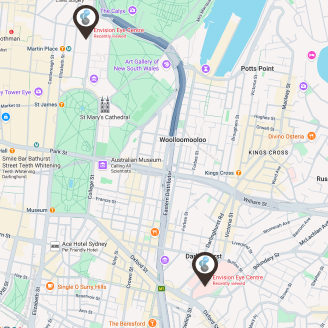
Envision Eye Centre is a boutique Ophthalmology practice located in Sydney. We perform all three types of vision correction surgery in the comfort of our Sydney CBD clinic. I am the Principal surgeon and perform all laser eye surgery procedures. Myself along with the Envision Eye Centre clinical team will take the time to explain your options clearly and answer all your questions before you decide to have surgery. To make the decision easier, we offer a free assessment to all patients considering laser eye surgery.
Home »
Are you suitable for laser eye surgery?
Laser eye surgery is not suitable for everyone. Take the first step to find out whether you can benefit.
Our most popular procedures

Hi, I’m Dr John Males
I’m the founder and principal surgeon at Envision Eye Centre, specialising in laser vision correction, cataract, and corneal surgery. With over 20 years’ experience, I’ve been involved in introducing advanced procedures such as SMILE® and laser-assisted cataract surgery in Australia. I’ve held leadership roles at St Vincent’s Hospital and Sydney Eye Hospital, and I continue to contribute to teaching and research through the University of Sydney. My focus is always on delivering safe, precise, and personalised care, using the latest technology to help patients achieve the best possible visual outcomes.
Dr John Males
M.B B. Sc. (Med)(Hons) MMed (Clin Epi) FRANZCO