

Learn the signs and effects of macular degeneration

Common symptoms can include blurred or missing words, dark areas in central vision, and straight lines that look distorted or wavy

Learn the signs and effects of macular degeneration

Common symptoms can include blurred or missing words, dark areas in central vision, and straight lines that look distorted or wavy

Macular degeneration can change how you read, see faces, and focus on detail

Explore the common signs, types, and treatment pathways for this central vision condition in one place

Age-related Macular Degeneration (ARMD) is a leading cause of severe vision loss in people aged 50 years or older. The macula is a small area of the retina at the back of the eye and is responsible for sharp central vision, allowing people to read and see fine details. AMRD is when the macula becomes damaged. As ARMD progresses further, central vision can become severely affected making reading impossible.

Age is the biggest factor contributing to the onset of ARMD. Most ARMD cases occur after age 50 although ARMD can sometimes occur at younger ages. Additional risk factors that contribute include smoking and family history of ARMD.

Symptoms experienced can be different for all people with ARMD. Often people hardly notice ARMD in its early stages. Typically, symptoms will present themselves as:

  • Blurred, jumping or missing words/letters on a page
  • Dark or empty areas appear in your central vision
  • Straight lines appear distorted or wavy.

Dry ARMD (Non-Neovascular)

  • This is the most common type of ARMD. Early in dry ARMD, vision is often normal, and the diagnosis is made by the presence of drusen seen by an ophthalmologist. As the disease progresses, gradual vision loss can occur and when severe, dry ARMD can cause severe central vision loss.

Wet ARMD (Neovascular = New Vessels)

  • This is the less common (but more aggressive) form of ARMD. If untreated, wet ARMD often leads to severe vision loss. Wet ARMD occurs when abnormal blood vessels break through the retina and leak fluid or blood. This leakage can lead to rapid and irreversible damage to the macula.

Many people do not realise that they have a macular problem until symptoms become problematic. Your eye doctor can use a range of useful diagnostic tools that help detect the early stages of ARMD before you experience any obvious changes.

Amsler Grid

  • This is a simple vision test that involves a small piece of graph paper testing one eye at a time. It identifies changes in your central vision that may cause the lines in the grid to disappear or appear wavy; this is a sign of ARMD.

Fluorescein Angiography

  • This procedure is used to determine whether you have the beginning of Wet ARMD. A small amount of yellow fluorescent dye (Fluorescein) is injected into a vein in your hand or arm where it enters the bloodstream and travels towards the eye. Once at the eye, it highlights the blood vessels in the retina so they can be photographed. Your eye doctor will continue to take pictures as the fluorescein circulates throughout the vessels to pinpoint specific areas of new vessel growth and leakage.

Optical Coherence Tomography (OCT)

  • OCT is an imaging system allowing your eye doctor to achieve high-resolution, clearly detailed images of retinal tissues and structures. It helps your eye doctor evaluate the health of the macula in great detail. Our powerful OCT 5000 can detect drusen, the earliest signs of ARMD. Besides detecting drusen, our OCT utilises the new AngioPlex algorithm to show abnormal blood vessels hiding underneath the fluid leaking into the macula.

Dilated Eye Exam

  • Your ophthalmologist will place drops in your eyes to enlarge the pupils. This provides a bigger window for your eye doctor to look through and comprehensively examine the back of your eye using a special magnifying lens.

Avoid smoking, exercise regularly, maintain normal blood pressure and cholesterol levels, eat a healthy diet rich in green, leafy vegetables, nuts & fish.

Many people do not realise that they have a macular problem until symptoms become problematic. Your eye doctor can use a range of useful diagnostic tools that help detect the early stages of ARMD before you experience any obvious changes.

Diet

  • A well-balanced diet is important for macular health. It is important to have a diet rich in green leafy vegetables and fish.

Nutritional Supplements

  • Nutritional supplements are a common form of treatment for dry ARMD. They consist of antioxidant vitamin supplements that may reduce the progression of dry ARMD. A large scientific study found that people at risk for developing advanced stages of ARMD lowered their risk of progression when treated with a high-dose of:
    • Beta Carotene (15 mg)
    • Copper (2 mg)
    • Vitamin C (500 mg)
    • Vitamin E (400 IU)
    • Zinc (80 mg).

Anti-VEGF Injections

  • Anti-VEGF injections are used to treat wet ARMD. They were introduced into practice in the mid-2000’s and their use has revolutionised the treatment of wet ARMD around the world
  • The medicine is injected into the eye to stop new blood vessel growth and leakage in the retina. In wet ARMD there is an abnormally high level of Vascular Endothelial Growth Factor (VEGF) protein secreted by the abnormal new vessels and this promotes further growth of abnormal blood vessels. Anti-VEGF injections block this new growth by targeting and blocking the VEGF protein
  • The goal of treatment is to dry out the fluid between the retinal layers at the macula thereby leading to stabilisation and improvement of vision.

Clear guidance for your eye care journey

Eye treatment options can vary from person to person. We help you understand what is happening and what care may be right for you

Step 1: REACH OUT

The first step is to book an assessment so your symptoms, concerns, or vision goals can be discussed with the clinic. Give our friendly team a call or use our easy contact form to get in touch.
Step 2: WE’LL MEET

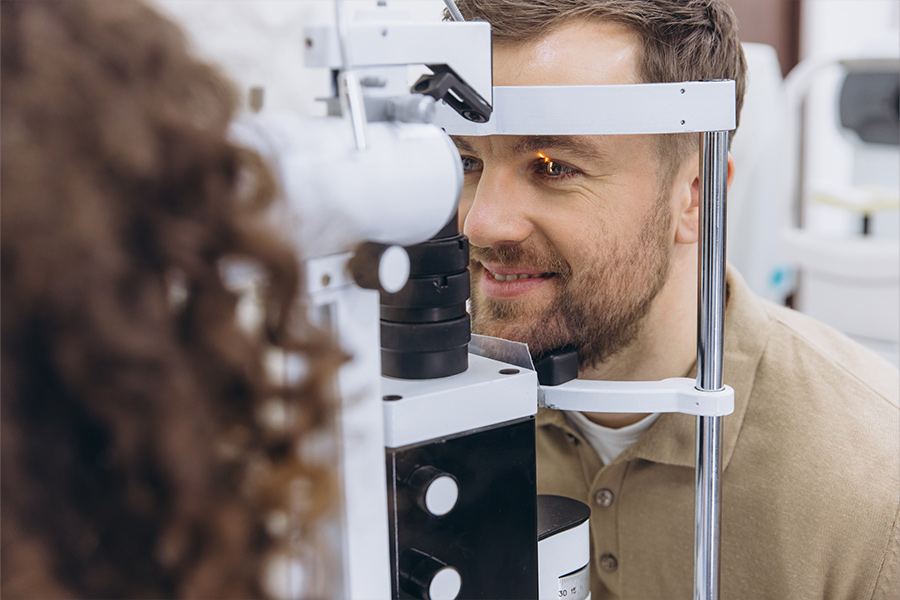
At your visit, our refractive surgeons will examine your eyes, explain the findings, and talk through the treatment options that may be appropriate for your condition and needs.

Step 3: ENJOY COMFORT

After treatment, the aim is to help you see more clearly, feel more comfortable, and manage your eye health with greater confidence. Depending on your condition and treatment plan, this may make daily life feel easier and more manageable.

Find comfort and clarity for your eyes

Contact us to discover the next step toward healthier, more comfortable vision

Hi, I’m Dr John Males

I’m the owner and principal surgeon at Envision Eye Centre, specialising in laser vision correction, cataract, and corneal surgery. With over 15 years’ experience, I’ve been involved in introducing advanced procedures such as SMILE® and laser-assisted cataract surgery in Australia. I’ve held leadership roles at St Vincent’s Hospital and Sydney Eye Hospital, and I continue to contribute to teaching and research through the University of Sydney. My focus is always on delivering safe, precise, and personalised care, using the latest technology to help patients achieve the best possible visual outcomes.

Dr John Males

M.B B. Sc. (Med)(Hons) MMed (Clin Epi) FRANZCO