

Learn the signs and causes of keratoconus

Keratoconus is a progressive condition where the cornea thins and bulges forward, changing the way light enters the eye and affecting vision

Learn the signs and causes of keratoconus

Keratoconus is a progressive condition where the cornea thins and bulges forward, changing the way light enters the eye and affecting vision

Keratoconus can change the shape of the cornea over time

Explore the symptoms, causes, progression, and treatment options for this condition in one place

Keratoconus is a thinning of the corneas leading to warping and distorted vision.

Keratoconus is a progressive eye disease resulting in a thinning and subsequent warping and distortion of the cornea. The normally spherical shape of the cornea is distorted, and a cone-like bulge develops.

The cone shape causes deflection of light as it enters the eye to the retina which causes visual distortion and significant visual impairment. Keratoconus is normally detected in patients in their teens or twenties.

The exact causes of keratoconus remain unknown, however current research indicates three main contributing factors:

Enzyme imbalance

  • New research has suggested that weakening of corneal tissue that leads to keratoconus can be attributed to an imbalance of enzymes in the cornea. This imbalance makes the cornea more susceptible to oxidative damage and bulge forward which causes the cornea to weaken.

Genetic origin

  • Studies indicate about 8% of patients have relatives with this corneal disease.

Eye rubbing

  • Patients who suffer from allergies such as hay fever or who have poorly fitted contact lenses (which has led to excessive eye rubbing) can affect the strength of the cornea leading to keratoconus.

Blurred and distorted vision is the main symptom of Keratoconus. This may be overcome in the early stages by prescription glasses or contact lenses. Frequent changes to the prescription could indicate a worsening condition of Keratoconus. Eventually, glasses will not be able to correct higher levels of vision distortion.

  • Vision that is blurred and distorted
  • More rapid changes in your glasses prescriptions than would normally be expected.

Many people don’t realise they have glaucoma as it occurs progressively. The main noticeable symptom of Glaucoma is a loss of peripheral vision and in extreme cases tunnel vision. It is an irreversible but treatable condition, so it is best to diagnose it as early as possible.

The following techniques are used to detect glaucoma:

  • Tonometer – Measures the intraocular pressure in your eye. The test is quick, simple and painless
  • Visual Field Test – Testing your visual field lets your doctor know if peripheral vision is being lost. There are several methods of examination available to your doctor
  • Ophthalmoscopy – Allows the Ophthalmologist to look directly through the pupil at the optic nerve to indicate whether or not damage from glaucoma is present
  • Imaging Technology – Newer technology to evaluate the optic nerve and retinal nerve fibre layer, the areas of the eye damaged by glaucoma with OCT optical coherence tomography
  • Gonioscopy – Examines the angle where fluid drains out of the eye and whether the angle is open, narrow, or closed.

Gas permeable contact lenses

  • These are rigid lenses that sit very tightly to the cornea and alter the irregular shape with a more uniform refracting surface. This tends to improve vision. The drawbacks include less patient comfort and can require frequent visits to the optometrist to fit and change the prescription.

Collagen Cross Linking

  • Cross linking slows and, in some cases, reverses the progression of corneal weakening and thinning due to keratoconus.
  • Treatment involves applying riboflavin (vitamin B2) drops to the eye and applying ultraviolet light after the cornea has absorbed the riboflavin over a 30-minute period. The treatment is thought to mimic the natural increase in rigidity of the cornea which occurs with age and natural exposure to ultraviolet light.

Cross linking has shown to increase corneal rigidity and stops progression of keratoconus in over 90% of those who undergo the procedure.

Corneal Rings

  • Corneal rings are an alternative treatment for keratoconus designed to reduce the need for a full corneal transplantation. The small plastic semicircular inserts (INTACS or Kerarings) are designed to remain permanently in the cornea. They can be removed or replaced if required. The treatment aims to produce a more rounded, even shape, improving the quality of vision.

Corneal transplant

  • In severe cases of keratoconus, a corneal transplantation may be needed due to scarring, extreme corneal thinning or increased intolerance to contact lenses. This procedure replaces the keratoconic cornea with healthy donor tissue. Patients may still be required to wear optical correction to enhance vision. Corneal transplantation is often followed by laser vision correction to maximise vision quality.

Clear guidance for your eye care journey

Eye treatment options can vary from person to person. We help you understand what is happening and what care may be right for you

Step 1: REACH OUT

The first step is to book an assessment so your symptoms, concerns, or vision goals can be discussed with the clinic. Give our friendly team a call or use our easy contact form to get in touch.
Step 2: WE’LL MEET

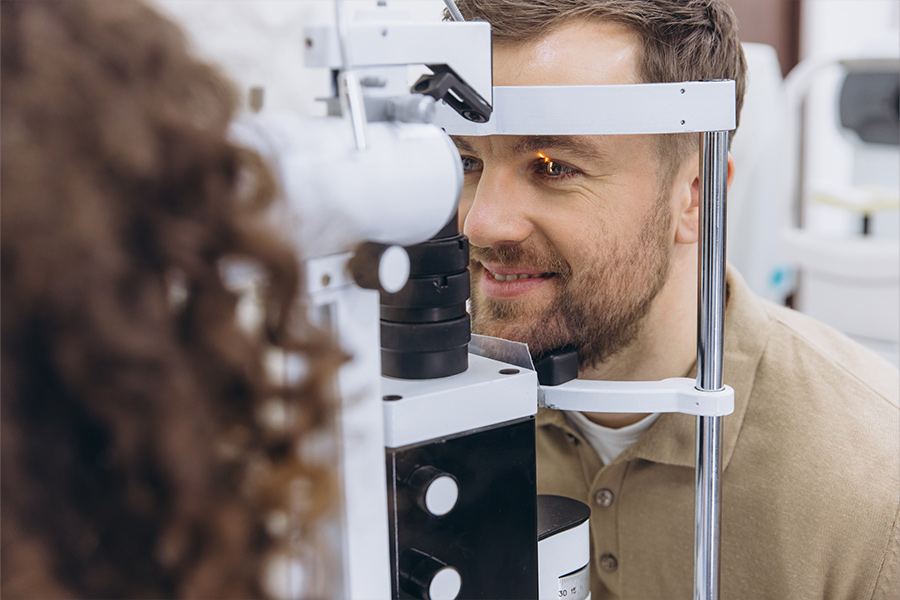
At your visit, our refractive surgeons will examine your eyes, explain the findings, and talk through the treatment options that may be appropriate for your condition and needs.

Step 3: ENJOY COMFORT

After treatment, the aim is to help you see more clearly, feel more comfortable, and manage your eye health with greater confidence. Depending on your condition and treatment plan, this may make daily life feel easier and more manageable.

Find comfort and clarity for your eyes

Contact us to discover the next step toward healthier, more comfortable vision

Hi, I’m Dr John Males

I’m the owner and principal surgeon at Envision Eye Centre, specialising in laser vision correction, cataract, and corneal surgery. With over 15 years’ experience, I’ve been involved in introducing advanced procedures such as SMILE® and laser-assisted cataract surgery in Australia. I’ve held leadership roles at St Vincent’s Hospital and Sydney Eye Hospital, and I continue to contribute to teaching and research through the University of Sydney. My focus is always on delivering safe, precise, and personalised care, using the latest technology to help patients achieve the best possible visual outcomes.

Dr John Males

M.B B. Sc. (Med)(Hons) MMed (Clin Epi) FRANZCO