

Find out if LASIK in Sydney could help you move beyond glasses and contacts

This widely used laser vision correction treatment is designed to correct refractive error in suitable patients

Find out if LASIK in Sydney could help you move beyond glasses and contacts

This widely used laser vision correction treatment is designed to correct refractive error in suitable patients

Dr John Males explains what LASIK is and how it works

Get a simple overview of LASIK including how it may help suitable patients

What LASIK could mean for your life

For suitable patients, LASIK can reduce the day-to-day hassle of managing glasses and contact lenses

Less daily hassle from glasses and contacts

Glasses can fog, slide, or feel restrictive, while contact lenses can dry out and become uncomfortable during long days, exercise, or time in air conditioning. After treatment, suitable patients may enjoy less reliance on these aids in daily life. That can mean less planning, less irritation, and fewer interruptions as the day moves from work to exercise to social time.

Feel more at ease in your day

Before treatment, you may feel inconvenienced, frustrated, limited, and anxious about the constant effort of managing vision. After treatment, the change is often emotional as well as practical. There may be less stress around remembering lenses, cleaning glasses, or wondering how vision will affect the day ahead. For suitable patients, that can bring a greater sense of ease, confidence, and freedom.

Start the day without thinking about your vision

Your day begins with seeing the clock without reaching for glasses. You get ready, head to work, go to the gym, meet friends, and enjoy the day without switching between contacts and glasses or planning ahead for both. The routine feels simpler. The day feels lighter. There is more room to focus on what you are doing rather than what your vision needs.

A quieter confidence others can notice

When someone no longer feels held back by glasses or contact lenses, the difference can show in quiet ways. They may seem more confident at work, more comfortable being active, and more relaxed in social situations. In your avatar brief, the “after” state includes feeling freer, more energised, and more like their best self. That shift can shape how they carry themselves each day.

What LASIK could mean for your life

For suitable patients, LASIK can reduce the day-to-day hassle of managing glasses and contact lenses

Less daily hassle from glasses and contacts

Glasses can fog, slide, or feel restrictive, while contact lenses can dry out and become uncomfortable during long days, exercise, or time in air conditioning. After treatment, suitable patients may enjoy less reliance on these aids in daily life. That can mean less planning, less irritation, and fewer interruptions as the day moves from work to exercise to social time.

Feel more at ease in your day

Before treatment, you may feel inconvenienced, frustrated, limited, and anxious about the constant effort of managing vision. After treatment, the change is often emotional as well as practical. There may be less stress around remembering lenses, cleaning glasses, or wondering how vision will affect the day ahead. For suitable patients, that can bring a greater sense of ease, confidence, and freedom.

A quieter confidence others can notice

When someone no longer feels held back by glasses or contact lenses, the difference can show in quiet ways. They may seem more confident at work, more comfortable being active, and more relaxed in social situations. In your avatar brief, the “after” state includes feeling freer, more energised, and more like their best self. That shift can shape how they carry themselves each day.

Start the day without thinking about your vision

Your day begins with seeing the clock without reaching for glasses. You get ready, head to work, go to the gym, meet friends, and enjoy the day without switching between contacts and glasses or planning ahead for both. The routine feels simpler. The day feels lighter. There is more room to focus on what you are doing rather than what your vision needs.

Your path to life with less reliance on glasses

Laser eye surgery can feel like a big step. We make the process clear, simple, and easy to follow

Step 1: START THE CONVERSATION

The first step is to find out whether laser vision correction may be suitable for your eyes. You can contact the clinic by phone or through the website to book your free assessment.
Step 2: WE’LL MEET

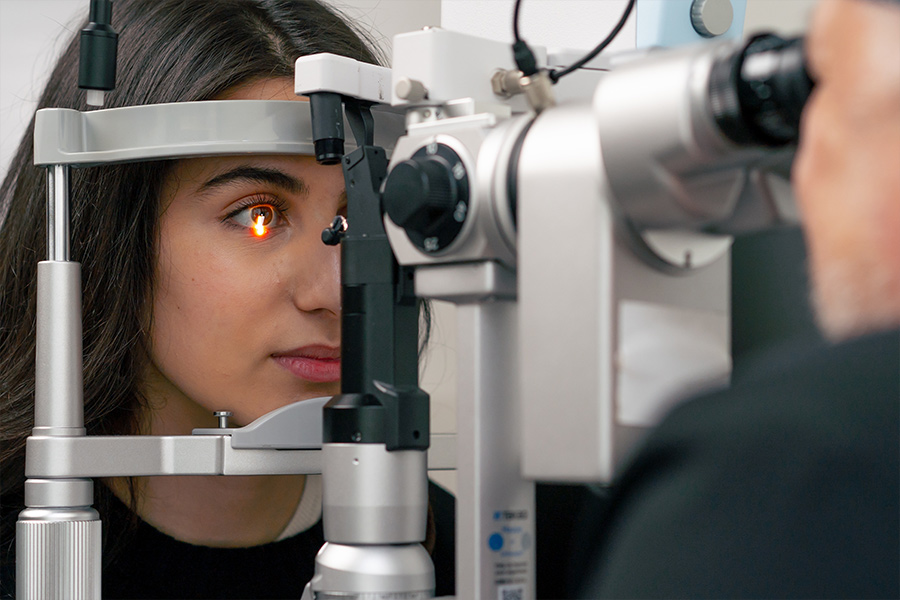
At your assessment, the team will examine your eyes, talk through your vision needs, and explain the options that may suit you. You will have time to ask questions and understand the next step.

Step 3: MOVE FORWARD WITH CLARITY

After treatment, everyday life may feel more convenient, with less need to think about glasses or contact lenses. The aim is to help suitable patients enjoy clearer vision for daily activities, depending on their individual circumstances.

Could laser eye surgery free you from glasses?

Book your free assessment to find out if laser eye surgery may be right for your eyes and your lifestyle

With LASIK, suitable patients may experience less reliance on glasses and contacts

Explore how LASIK works, who it may suit, and what to expect before, during, and after treatment

Who is suitable for LASIK Laser Eye Surgery?

The following people are a good fit for LASIK surgery:

  • People over the age of 21 with a stable refraction prescription for more than 12 months
  • Suitable patients who are either short-sighted (myopic), far-sighted (hyperopic) or who have astigmatism
  • People who have good vision in glasses or contact lenses
  • Those with moderate corneal thickness
  • LASIK can treat people with prescriptions from +4 to -10 dioptres
  • If you wear contact lenses please cease wearing soft lenses three days before and hard lenses 3 weeks before the procedure. This will be outlined in your assessment.

Who is not suitable for LASIK Laser Eye Surgery?

  • Patients must not be pregnant or breastfeeding at the time of the procedure
  • Who have thinner than normal corneas. The PRK vision correction is best in people with thin corneas.
  • Long-sighted patients over 45 may be better suited to Refractive Lens Exchange.
Envision Eye Centre performs the latest LASIK procedure known as Femto-LASIK. With traditional LASIK, a controlled blade (microkeratome) is used to create the flap (a hinged piece of corneal tissue). With Femto-LASIK, a highly precise flap is quickly created with the Carl ZEISS Visumax Femtosecond laser removing the need for a blade.

Benefits

  • It is a well-established laser vision correction treatment with a long history of use
  • It can treat a range of refractive errors and is often associated with quick visual recovery in suitable patients
  • It is also widely known and commonly performed.

Considerations

  • High incidence of dry eye
  • Higher chance of infection than non-flap based procedures
  • Not suitable for people who play contact sports, pilots or military personnel due to flap detachment risk.
LASIK is the most widely performed laser vision correction surgery worldwide with over 10 million successful surgeries completed. With any surgery there are risks although the chances of complications are considered less than 1 in 5000. Risks your doctor will discuss with you are:

  • Flap related complications are very uncommon and on the rare occasion this does occur it is treatable
  • Under or over correction of eyesight is rare but can occur. This can be remedied with re-treatment (enhancement) or mild glasses for the required distance
  • Dry eye is usually a short-term problem and resolves as the cornea heals. Lubricating drops are given to all patients as some level of dryness is expected. Patients with pre-existing dry eye are at an increased risk of severe dryness post LASIK
  • Visual changes such as increased glare or haloes may be noticed while driving at night. This is more prevalent in people with high prescriptions or pre-existing night vision problems
  • Corneal ectasia can occur when the cornea becomes progressively thinner after a laser procedure and the vision is distorted and blurred. Glasses or contact lenses may be prescribed to correct the vision and Collagen Cross Linking may be performed to halt any progressive thinning. All efforts are made by your surgeon to screen out any patients who are at a greater risk of this complication.

LASIK is one option within laser vision correction, but it is not the only one. Depending on your prescription, age, corneal shape, and lifestyle, alternatives may include SMILE Pro, PRK, or lens-based procedures such as refractive lens exchange.

For some patients, another procedure may be more suitable than LASIK, especially if there are corneal, dry eye, or age-related vision considerations.

The right choice depends on a careful assessment, not a one-size-fits-all approach.

Step 1: Creating the flap: A flap is created with a highly precise femtosecond laser.

Step 2: Folding back the flap: The flap is gently folded back, exposing the inner corneal tissue to be treated.

Step 3: Correct the error: An excimer laser reshapes the corneal tissue, correcting the refractive error.

Step 4: Reposition the flap: The flap is returned to its original position, protecting the eye like a natural bandage.

Prior to surgery

  • Please expect to be at the facility for 1 hour. This includes pre-operative administration of relaxing medication and eye drops. We will also provide some instructions on what to expect when you are in the laser suite
  • It is important to have a friend or family member accompany you on the day
  • Wear warm comfortable clothes as the laser room is set at a specific temperature and humidity for the ideal operating performance of the laser
  • If you wear contact lenses these should not be worn 3 days prior to surgery. This will be explained again to you again in your free assessment.

During the procedure

  • The actual LASIK procedure takes about 10-15 minutes per eye. It will be a pain free experience as topical anaesthetic will be administered to numb the front part of the eye. You will have a special instrument inserted under your eyelids to stop you being able to close the eye
  • The doctor will talk to you throughout the procedure with instructions where to look. The Femto – LASIK component will take approximately 20 seconds to create the flap. The bed will then be moved under the excimer laser
  • It is common to feel a bit of tugging as the doctor lifts the flap. Once the flap is lifted the laser will be applied to re-shape the tissue. This will be quite quick but does depend on the amount of treatment per patient
  • Once the treatment is complete the doctor will put the flap back into position and wait about a minute for it to adhere
  • The doctor will then apply both an antibiotic and steroid eye drop. You will be taken to a consulting room where the surgeon will run through instructions and check the position of the flap. It is normal for vision to appear hazy. It is very important not to rub the eye after surgery as it can dislodge the flap.

Post-operative recovery

  • Hard eye shields will be given to wear. Most patients notice vision is clearer quickly after surgery although it is normal to experience some haze initially. Most patients are able to return to normal activities and work a few days after surgery and this includes driving
  • We recommend patients to not swim or apply make-up for up to 1 month after the procedure. This is to allow the flap to fully heal.

Does wearing glasses or contacts hold you back from living fully?

If so, you have the choice to explore your laser eye surgery options

Always planning your day around your vision?

You wake up and can’t see clearly. You plan your day around glasses or contacts. You deal with dry eyes, fogging lenses, and constant switching. It’s frustrating, and it interrupts moments that should feel easy.

The first step is simple. Take our free 2-minute self-test to find out if there’s a more convenient option for your eyes and your lifestyle.

Feeling frustrated and restricted?

You want to be active, spontaneous, and present. But dry eyes, irritation, and blurred vision get in the way. It can feel limiting, stressful, and sometimes even knock your confidence. By taking the self test you can take the first step in exploring your options.

Not feeling like your best self?

Whether it’s at work, at the gym, or out socially, you feel like your vision is holding you back. You’re aware of it. You think others notice it too. It’s a quiet frustration that follows you everywhere. Taking our quick self-test can help you find out if there’s a vision correction option that better fits your lifestyle and reduces this daily frustration.

Affiliations and memberships

We are proud to be a part of these professional bodies

Could laser eye surgery be right for you?

Take our 2-minute self-test to see whether laser vision correction may suit your eyes and your day-to-day life

Get your questions answered about eye treatments in Sydney

Get a clear, expert-led overview of your options, from vision correction to eye health, so you can make confident decisions about your eyes

Academic resources on LASIK

Learn how this well-established laser procedure has been studied over time through clinical research and long-term data. These links will take you off our website
In 2009, the FDA, NEI, and DoD launched the LASIK Quality of Life Collaboration Project (LQOLCP) to study potential risks from LASIK surgery. The project developed tools to track patient-reported outcomes (PROs) before and after surgery, including visual symptoms and their impact on daily activities. Results showed high satisfaction rates but noted minor visual symptoms post-surgery. Click here to read more.
This article compares LASIK and contact lenses, highlighting that both are generally safe but carry different risks. Research shows long-term contact lens use may have a higher risk of infection and vision loss than LASIK. It explains how each option works and helps patients make informed decisions about vision correction. Find out more here.
The FDA PROWL studies focused on patient-reported outcomes after LASIK, using a validated questionnaire to better understand symptoms and satisfaction. Results showed high satisfaction rates, with most patients reporting improved vision and quality of life. Some experienced new visual symptoms or dry eye, though these often decreased over time. Learn more here.

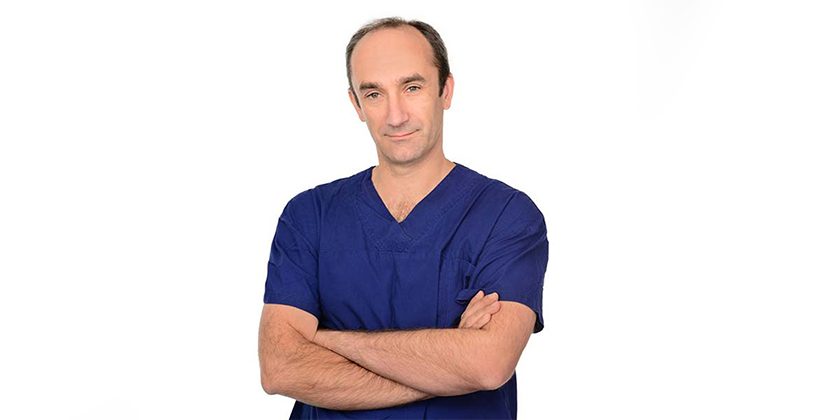
Hi, I’m Dr John Males

I’m the owner and principal surgeon at Envision Eye Centre, specialising in laser vision correction, cataract, and corneal surgery. With over 15 years’ experience, I’ve been involved in introducing advanced procedures such as SMILE® and laser-assisted cataract surgery in Australia. I’ve held leadership roles at St Vincent’s Hospital and Sydney Eye Hospital, and I continue to contribute to teaching and research through the University of Sydney. My focus is always on delivering safe, precise, and personalised care, using the latest technology to help patients achieve the best possible visual outcomes.

Dr John Males

M.B B. Sc. (Med)(Hons) MMed (Clin Epi) FRANZCO